
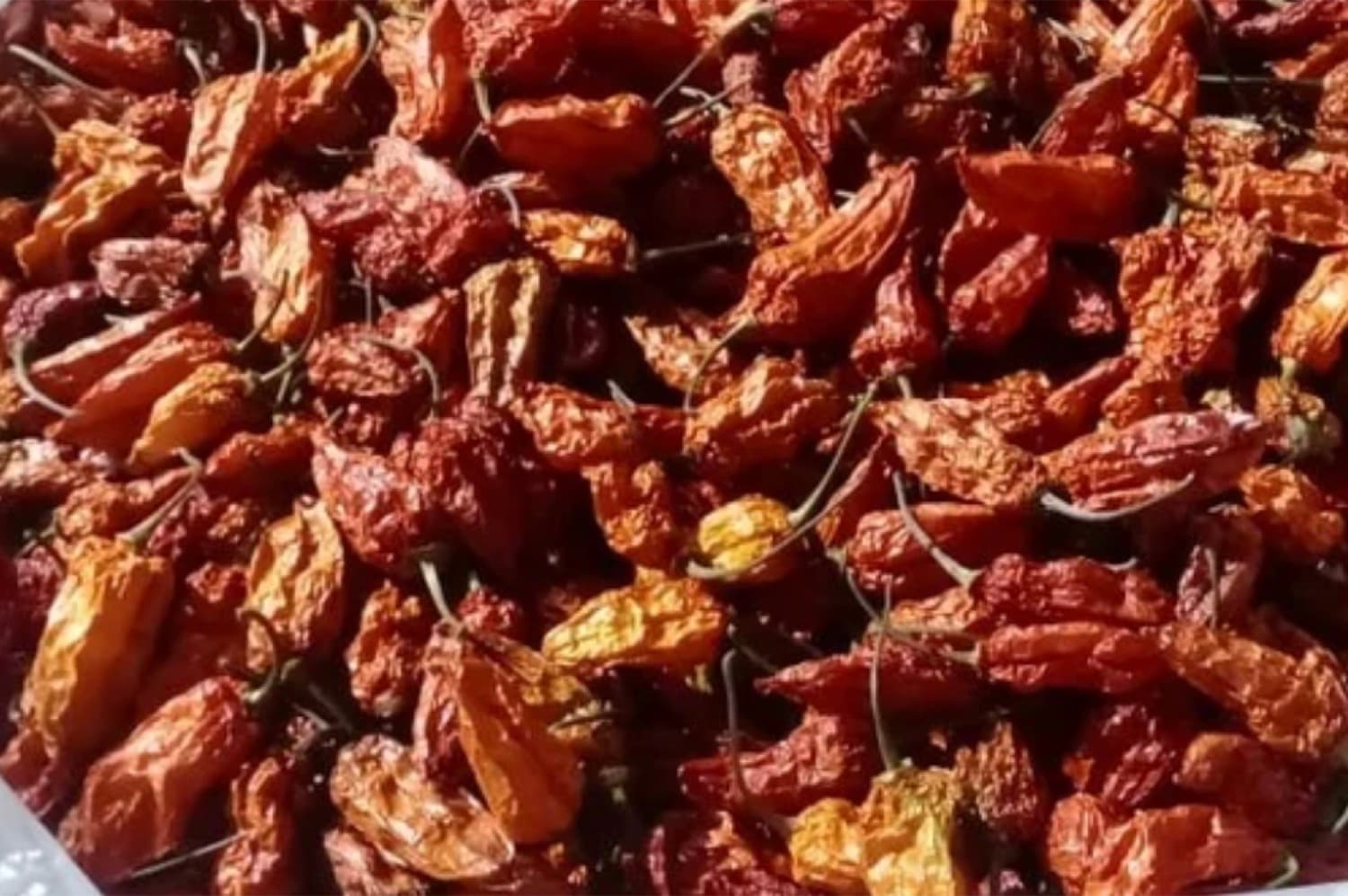
Oven-dried Naga chilli, also known as Bhut Jolokia, is one of the hottest chillies you can cook with, carrying roughly a million Scoville heat units. The short answer for using it safely: start with a tiny fragment of a pod rather than a whole one, tear or crush it instead of grinding it loosely by hand, and always wear gloves when you handle it. One pod can carry the heat of a dozen ordinary dried red chillies, so a little goes a very long way.
What Makes Naga Chilli So Different
Naga chilli comes from North-East India, where it has long been part of local cooking and pickling traditions. Nature Presents sells it oven-dried and whole, at around one million Scoville heat units, with a simple instruction that says it all: handle with respect. Unlike the everyday red chillies most Indian kitchens use, a single Naga chilli pod is strong enough to flavour an entire pot, which changes how you should think about measuring it.
How Much Naga Chilli to Use
Because the heat is so concentrated, treat Naga chilli as a seasoning you add in fragments, not whole pods per person. A good starting point for a family-sized curry or dal is a small sliver, roughly a quarter of a pod, torn off and added whole so you can remove it once the dish has taken on enough heat. Taste as you go and let the dish rest for a few minutes before deciding whether to add more, since the heat builds after cooking.
- For a pot of dal or curry serving 4: start with a quarter pod, torn, removed after simmering
- For a chutney or pickle batch: a half pod blended with plenty of garlic, tomato or coconut to carry the heat
- For infused oil: one small piece steeped in warm oil, strained before use
- For the adventurous: build up slowly over several cooking sessions rather than jumping to a full pod
Ways to Cook With It
Naga chilli works best when it is allowed to infuse rather than being eaten directly. In North-Eastern kitchens it is common in pork and bamboo shoot curries, fermented chutneys, and pickles, where the chilli's heat mellows and blends with other strong flavours over time.
- Tempering: drop a small torn piece into hot oil at the start of cooking, then remove before serving
- Chutney: pound a fragment with garlic, tomato or coconut for a fiery dip that goes a long way
- Pickle: a sliver added to an oil or vinegar-based pickle for background heat that develops over days
- Infused oil: steep a small piece in warm (not smoking) oil, strain, and drizzle sparingly over finished dishes
Handling Naga Chilli Safely in the Kitchen
The oils that make Naga chilli so hot cling to skin and transfer easily, so a few simple habits make a real difference in the kitchen.
- Wear gloves when tearing, cutting or grinding the pods
- Never touch your eyes, nose or mouth while handling it, even with gloves on
- If it does touch bare skin, wash with soap and oil (plain water alone will not remove the capsaicin) rather than water alone
- Work in a ventilated kitchen, since the dust from dry-grinding can irritate the throat and eyes
- Store it well out of reach of children and pets
Pairing and Balancing the Heat
Naga chilli's heat is best balanced with richness rather than water, which barely touches capsaicin heat. Coconut, dairy, ghee and fermented ingredients all soften the sharpness while letting the chilli's fruity, smoky background flavour come through. If you enjoy layered heat, Nature Presents' Heat Pack combo pairs this Naga chilli with Tellicherry Black Pepper, so you get the pepper's rounder, immediate warmth alongside the slower, much fiercer burn of the chilli.
Storing Your Naga Chilli
Keep the pods whole for as long as possible rather than grinding them in advance, since whole dried chillies hold their aroma and heat far longer than powder. Store them in an airtight container, away from direct light, heat and moisture, the same way you would store any whole dried spice. Tear or crush only the amount you need for each dish.
A Word of Caution
Naga chilli is a seasoning for people who already enjoy spicy food, and even then it rewards caution. Go slowly if you are new to very hot chillies or have a sensitive stomach, and keep it away from children's food entirely. If you are cooking for guests, it is worth mentioning that the dish contains Naga chilli so no one is caught by surprise.